

Description
California IWC Wage Order No. 6 – Laundry, Linen Supply, Dry Cleaning & Dyeing
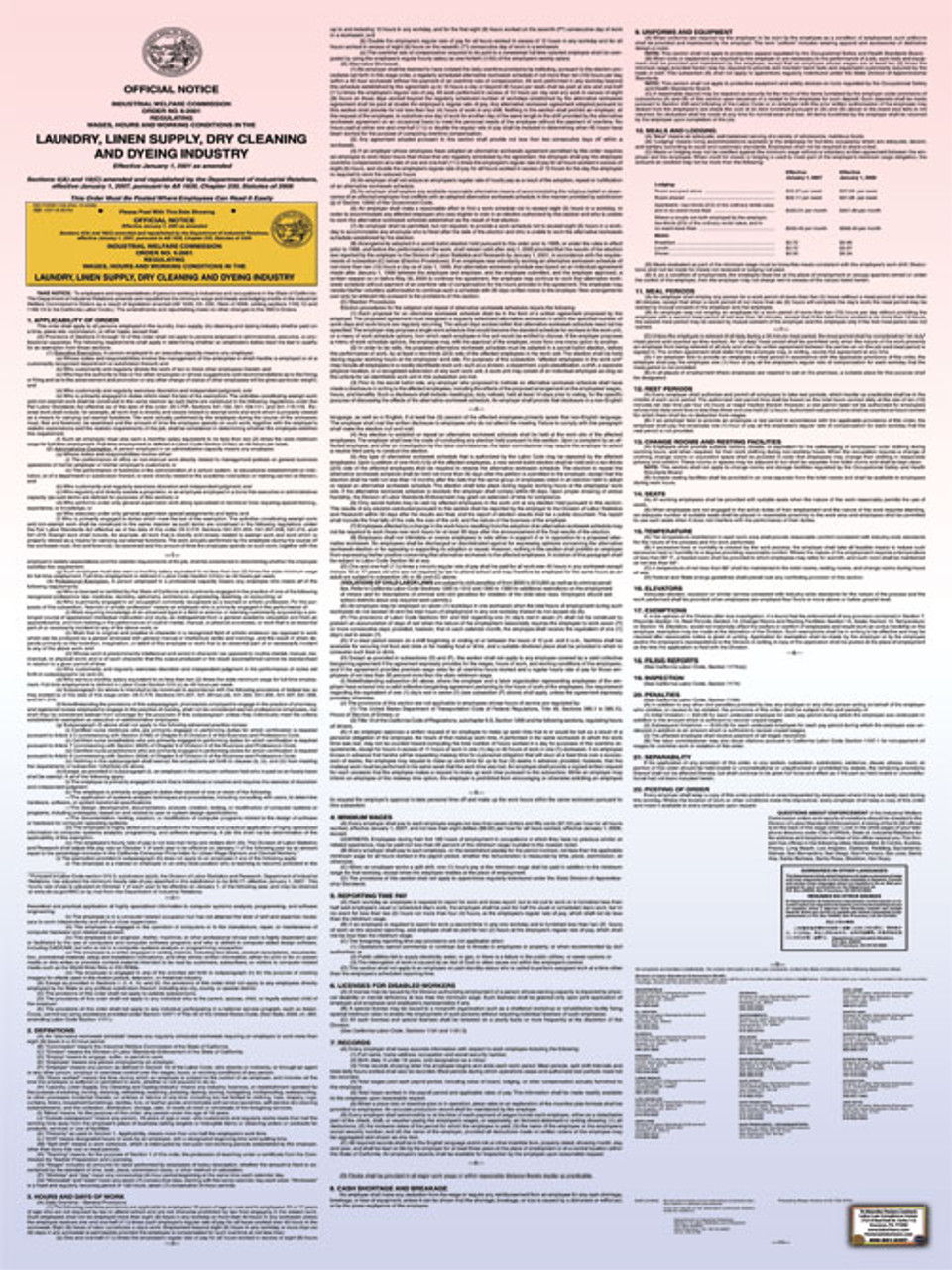
Help satisfy California workplace posting requirements with the California IWC Wage Order No. 6 – Laundry, Linen Supply, Dry Cleaning and Dyeing Industry Poster. This 18 x 24-inch notice explains important wage, hour, overtime, meal period, rest period, and working-condition requirements for employees covered by California Industrial Welfare Commission Wage Order No. 6.
California employers must determine which Industrial Welfare Commission Wage Order applies to their business or employees and post the applicable order in an area frequented by employees where it can be easily read during the workday.
What Is California IWC Wage Order No. 6?
IWC Wage Order No. 6-2001 regulates wages, hours, and working conditions for employees in California's Laundry, Linen Supply, Dry Cleaning and Dyeing Industry.
The order applies to covered employees whether they are paid on a time, piece-rate, commission, or other basis, subject to applicable exemptions.
What Businesses Are Covered by Wage Order 6?
California defines the Laundry, Linen Supply, Dry Cleaning and Dyeing Industry broadly. Covered businesses and establishments can include operations involving:
- Commercial laundries
- Linen supply services
- Dry cleaning establishments
- Self-service laundries
- Self-service dry cleaning establishments
- Clothing cleaning and pressing
- Textile and fabric cleaning
- Rug and carpet cleaning involving covered fabric-cleaning operations
- Drapery and curtain cleaning
- Fur and leather goods cleaning
- Dyeing operations
- Fabric waterproofing
- Mothproofing and fumigating covered articles
- Collection and distribution of laundry and dry cleaning
- Storage of covered laundry and cleaning items
- Retail or wholesale sale or resale of covered laundry and cleaning services
What Materials and Products Are Covered?
Wage Order No. 6 applies to covered processes involving articles or fabrics of many kinds, including:
- Clothing
- Hats
- Draperies
- Rugs
- Curtains
- Linens
- Household furnishings
- Textiles
- Furs
- Leather goods
The order also covers processes incidental to washing, ironing, cleaning, refreshing, restoring, pressing, dyeing, storing, fumigating, mothproofing, and waterproofing these materials.
Wage Order 6 vs. Public Housekeeping Wage Order 5
Wage Order No. 6 should not be confused with Wage Order No. 5.
Wage Order No. 6 applies specifically to the Laundry, Linen Supply, Dry Cleaning and Dyeing Industry. Wage Order No. 5 covers California's Public Housekeeping Industry, which includes many hotels, restaurants, hospitals, care facilities, and similar establishments.
Employers should evaluate their primary business operations and employee duties to determine which California Wage Order applies.
What Workplace Rules Does Wage Order 6 Cover?
California IWC Wage Order No. 6 addresses numerous wage-and-hour and working-condition requirements for covered employees, including:
- Hours and days of work
- Overtime compensation
- Alternative workweek schedules
- Minimum wages
- Reporting time pay
- Split shifts
- Payroll and employment records
- Cash shortages and breakage
- Uniforms and equipment
- Meals and lodging
- Meal periods
- Rest periods
- Seats
- Temperature
- Elevators
- Exempt employee classifications
- Other working conditions addressed by the order
California Minimum Wage and Wage Order 6
California's statewide minimum wage is updated separately from the underlying IWC Wage Orders. Employers should display the current California Minimum Wage notice together with the applicable Wage Order.
Employers must pay covered employees at least the current applicable California minimum wage and should also determine whether a city, county, industry-specific, or other law establishes a higher minimum wage for employees working at a particular location.
Overtime Under IWC Wage Order 6
Wage Order No. 6 contains California overtime requirements for covered nonexempt employees.
Generally, covered employees may be entitled to overtime compensation at one and one-half times their regular rate of pay for applicable hours worked over eight hours in a workday, over 40 hours in a workweek, and for the first eight hours worked on the seventh consecutive day of work in a workweek.
Applicable hours worked over 12 in a workday and over eight hours on the seventh consecutive day can require double-time compensation.
Alternative Workweek Schedules
Wage Order No. 6 contains provisions allowing qualifying employees to adopt an alternative workweek schedule when California's applicable election and scheduling requirements are satisfied.
An approved alternative workweek can permit regularly scheduled workdays of more than eight hours without daily overtime in certain circumstances, subject to the limits and requirements established by California law.
Meal Period Requirements
Wage Order No. 6 contains meal period requirements for covered employees. In general, covered employees may not be employed for a work period of more than five hours without receiving a meal period, subject to applicable exceptions and waiver provisions.
A second meal period may also be required when an employee works more than 10 hours in a workday, subject to applicable California requirements.
Rest Period Requirements
Covered nonexempt employees are generally entitled to authorized and permitted rest periods based on the total hours worked.
Employers should ensure that employees receive applicable rest periods and that workplace policies accurately reflect current California requirements.
Reporting Time Pay
Wage Order No. 6 contains reporting time pay requirements that can apply when an employee reports for a scheduled workday but is provided less than the required amount of work.
Generally, when an employee reports as required but is furnished less than half of the employee's usual or scheduled day's work, reporting time pay may be owed subject to the requirements and exceptions contained in the Wage Order.
Split Shift Requirements
A split shift is a work schedule interrupted by unpaid, non-working periods established by the employer other than bona fide meal or rest periods.
Wage Order No. 6 contains requirements concerning additional compensation for split shifts in applicable circumstances.
Uniforms and Equipment
When an employer requires an employee to wear a uniform as a condition of employment, Wage Order No. 6 generally requires the employer to provide and maintain the required uniform.
The Wage Order also addresses employer responsibility for tools and equipment required or necessary for the performance of the job, subject to applicable exceptions.
Cash Shortages, Breakage and Equipment Loss
Wage Order No. 6 generally prohibits employers from deducting wages or requiring employee reimbursement for cash shortages, breakage, or equipment loss unless applicable requirements concerning dishonest or willful conduct or gross negligence are satisfied.
Employers should carefully review California requirements before making deductions involving workplace losses or damaged equipment.
Does Wage Order 6 Apply to Exempt Employees?
Wage Order No. 6 contains exemptions from certain sections for employees who satisfy California's requirements for executive, administrative, or professional exemptions.
The order also contains provisions concerning outside salespersons and other categories excluded from some or all of its requirements.
Whether an employee qualifies as exempt depends on actual duties, compensation, and other applicable requirements. A job title or salaried status alone does not establish an exemption.
Where Must IWC Wage Order 6 Be Posted?
California requires every employer subject to Wage Order No. 6 to keep a copy of the order posted in an area frequented by employees where it can be easily read during the workday.
Appropriate locations may include:
- Employee break rooms
- Employee bulletin boards
- Laundry production areas
- Dry cleaning facilities
- Linen processing facilities
- Employee entrances
- Time-clock areas
- Other conspicuous employee locations
When the location of work or other conditions make posting impractical, the employer must keep a copy of the order and make it available to employees upon request.
Is California IWC Wage Order No. 6 Required?
Yes, when Wage Order No. 6 applies to the employer or employees. California requires employers to post the applicable Industrial Welfare Commission Wage Order in an area frequented by employees where it can be easily read during the workday.
The applicable Wage Order should be displayed with other required California and federal workplace notices. Employers should also maintain the current California Minimum Wage notice with the applicable IWC industry or occupation order.
How Do I Know Which California Wage Order Applies?
California maintains multiple industry and occupation Wage Orders. The correct order depends on the employer's industry, business operations, employee occupations, and other factors.
Laundry, dry cleaning, linen supply, hospitality, retail, manufacturing, and other businesses may fall under different Wage Orders even when some employee duties overlap.
Employers should evaluate their actual operations before selecting the Wage Order to display.
IWC Wage Order No. 6 Poster Specifications
- 18"W x 24"H
- Portrait orientation
- Printed in full color
- Laminated with high-quality laminate
- Available in English and Spanish
- California Laundry, Linen Supply, Dry Cleaning and Dyeing Industry Wage Order
California Labor Law and Compliance Resources
Labor Law Compliance Center provides employers with California labor law posters, IWC Wage Orders, city and local workplace notices, specialty postings, and compliance resources throughout the United States. Browse our California IWC Wage Orders or visit our California Labor Law Posters page for additional California workplace posting requirements and compliance products.


