Description
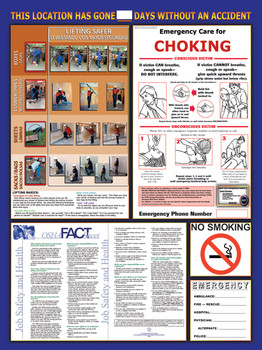
Lifting Safety Workplace Poster
Help employees reduce the risk of strains, sprains, and back injuries with the Lifting Safety Workplace Poster. This visual safety reminder reinforces proper lifting techniques and safe material-handling practices for employees who regularly lift, carry, move, or lower objects in the workplace.
Safe lifting practices are important in warehouses, manufacturing facilities, construction sites, retail operations, shipping and receiving areas, maintenance departments, and other workplaces where employees perform manual material-handling tasks.
How Can Employees Lift Safely?
Employees should evaluate a load and the surrounding work area before attempting a manual lift. Important safe lifting practices include:
- Evaluate the weight, size, and stability of the load before lifting
- Use mechanical lifting or material-handling equipment when appropriate
- Ask for assistance when a load cannot be safely handled by one person
- Keep the load close to the body whenever possible
- Maintain a stable position and secure grip
- Keep the back in a neutral position while lifting
- Avoid twisting the torso while carrying or lifting a load
- Turn by moving the feet instead of twisting the body
- Avoid unnecessary lifting from floor level or above shoulder height
- Keep walking and material-handling areas clear of hazards
Why Is Proper Lifting Important?
Manual lifting and material handling can expose employees to ergonomic risk factors that contribute to back injuries and other musculoskeletal disorders. The risk of injury can increase with heavier loads, repetitive lifting, awkward postures, twisting, poor handholds, long reaches, and frequent or prolonged lifting tasks.
Employers can help reduce lifting hazards by improving the design of material-handling tasks, reducing load weights when practical, positioning materials at more favorable heights, and providing mechanical assistance such as carts, hand trucks, pallet jacks, or other lifting equipment when appropriate.
OSHA Guidance for Lifting and Material Handling
OSHA addresses material handling under 29 CFR 1910 Subpart N and provides ergonomics guidance for identifying and reducing hazards associated with manual lifting and material handling.
OSHA does not establish one universal maximum weight that every employee can safely lift. The risk associated with a lifting task depends on multiple factors, including the weight and size of the load, lifting frequency, body position, twisting, vertical and horizontal lifting distance, grip, and workplace conditions.
Use Mechanical Assistance When Appropriate
Whenever practical, employers should consider engineering controls and material-handling equipment to reduce strenuous manual lifting. Depending on the workplace and task, this may include carts, hand trucks, pallet jacks, conveyors, forklifts, lift tables, or other mechanical assistance.
Reducing the weight of loads and positioning frequently handled materials closer to waist height can also help reduce awkward postures and excessive reaching.
Where Can This Lifting Safety Poster Be Used?
The Lifting Safety Workplace Poster can help reinforce safe material-handling practices in workplaces such as:
- Warehouses and distribution centers
- Manufacturing facilities
- Shipping and receiving departments
- Construction and maintenance operations
- Retail stockrooms
- Delivery and transportation operations
- Industrial facilities
- Employee safety and training areas
Reinforce Safe Lifting Practices
Displaying lifting safety reminders can help reinforce employee training and encourage workers to evaluate loads, use proper lifting techniques, and request assistance or mechanical equipment when needed.
This poster is intended as a supplemental workplace safety and employee-awareness resource. It does not replace required employee training, ergonomic assessments, workplace-specific lifting procedures, or other applicable OSHA requirements.