Description
Fair Housing & Equal Housing Opportunity Poster
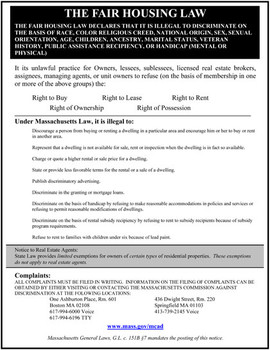
Help communicate federal fair housing rights and Equal Housing Opportunity principles with the Fair Housing & Equal Housing Opportunity Poster. This 8.5 x 11-inch notice provides applicants, tenants, buyers, and other individuals with a visible reminder that discrimination in housing and housing-related activities is prohibited under federal law.
The federal Fair Housing Act prohibits discrimination in the sale, rental, financing, advertising, and other housing-related activities based on protected characteristics. Housing providers and real estate professionals should understand their fair housing responsibilities and ensure that applicants and residents receive equal access to housing opportunities.
What Is the Fair Housing Act?
The Fair Housing Act is a federal civil rights law that prohibits discrimination in housing and housing-related transactions.
The law applies to many activities involving the sale, rental, financing, advertising, and availability of housing and protects individuals from discrimination based on characteristics identified by federal law.
Who Is Protected Under the Fair Housing Act?
The federal Fair Housing Act prohibits housing discrimination because of:
- Race
- Color
- National origin
- Religion
- Sex
- Familial status
- Disability
State and local fair housing laws may provide additional protections beyond those established by federal law.
What Housing Activities Are Covered?
Fair housing protections can apply to many aspects of obtaining, using, and enjoying housing.
Depending on the circumstances, federal protections can apply to:
- Renting a home or apartment
- Buying a home
- Advertising housing for rent or sale
- Setting rental terms or conditions
- Providing housing-related services or facilities
- Mortgage lending and residential real estate financing
- Property appraisals
- Real estate brokerage services
- Tenant screening and application procedures
- Other housing-related transactions
What Are Examples of Housing Discrimination?
Housing discrimination can take many forms. Depending on the circumstances, prohibited conduct may include:
- Refusing to rent or sell housing because of a protected characteristic
- Falsely stating that housing is unavailable
- Applying different rental or sale terms to similarly situated individuals
- Setting different deposits, fees, or other housing conditions
- Using discriminatory housing advertisements
- Steering individuals toward or away from particular neighborhoods or properties
- Providing different housing services or facilities
- Refusing certain reasonable accommodations for a person with a disability
- Refusing certain reasonable modifications for a person with a disability
- Harassing individuals because of a characteristic protected by the Fair Housing Act
- Retaliating against individuals for exercising fair housing rights
Fair Housing Rights for Families With Children
Familial status is protected under the Fair Housing Act. Federal protections generally apply to households with one or more children under age 18 living with a parent, legal custodian, or another person with the written permission of the parent or legal custodian.
Protections can also apply to individuals who are pregnant or who are in the process of obtaining legal custody of a child.
Certain housing for older persons may qualify for exemptions from some familial-status requirements when applicable federal requirements are satisfied.
Fair Housing Rights for People With Disabilities
The Fair Housing Act provides important protections for individuals with disabilities. Housing providers may be required to make reasonable accommodations in rules, policies, practices, or services when necessary to allow a person with a disability an equal opportunity to use and enjoy a dwelling.
Individuals with disabilities may also have rights concerning reasonable modifications to housing when applicable requirements are met.
What Is a Reasonable Accommodation?
A reasonable accommodation is a change, exception, or adjustment to a rule, policy, practice, or service that may be necessary for a person with a disability to have an equal opportunity to use and enjoy housing.
Whether a particular accommodation is required depends on the facts and applicable fair housing requirements.
What Is a Reasonable Modification?
A reasonable modification generally involves a physical change to a dwelling or common area that may be necessary for a person with a disability to fully use and enjoy the premises.
Responsibilities for costs and restoration can vary depending on the housing, funding, and laws involved.
Fair Housing and Housing Advertising
Housing advertisements should not indicate a preference, limitation, or discrimination based on a characteristic protected by the Fair Housing Act.
Fair housing requirements can apply to advertising through:
- Websites and online listings
- Social media
- Newspapers and magazines
- Signs and flyers
- Rental listings
- Real estate advertisements
- Other marketing materials
Equal Housing Opportunity
The Equal Housing Opportunity logo, slogan, and statement are commonly used to communicate a commitment to fair housing and nondiscrimination in housing-related activities.
HUD maintains Equal Housing Opportunity graphics and guidance for use in applicable housing advertising, marketing, and compliance materials.
Where Should a Fair Housing Poster Be Displayed?
When HUD fair housing posting requirements apply, the Fair Housing Poster should be prominently displayed where it is readily apparent to individuals seeking housing.
Depending on the property or organization, appropriate locations may include:
- Rental offices
- Real estate offices
- Leasing offices
- Model units
- Property management offices
- Sales offices
- Other locations where housing sales or rental activity occurs
Is a Fair Housing Poster Required?
Fair Housing Poster requirements depend on the type of housing provider, real estate operation, federal program participation, and applicable HUD regulations.
For example, HUD requirements applicable to certain HUD-assisted or FHA-related housing activities require the Fair Housing Poster to be prominently displayed in offices where sales or rental activity takes place.
This Fair Housing & Equal Housing Opportunity Poster can help communicate federal fair housing rights, but housing providers should determine which specific HUD, federal, state, and local fair housing notices apply to their operations.
How Can Someone Report Housing Discrimination?
Individuals who believe they have experienced housing discrimination may file a complaint with the U.S. Department of Housing and Urban Development (HUD).
Individuals should report suspected discrimination promptly because legal filing deadlines may apply. Information concerning the housing involved, individuals or organizations involved, dates, and a description of the alleged discrimination can help HUD evaluate a complaint.
Federal vs. State Fair Housing Requirements
State and local fair housing laws may provide protections or posting requirements in addition to federal law. Housing providers should determine whether state or local notices are required at each property or office.
Labor Law Compliance Center also provides state-specific fair housing notices for jurisdictions with additional housing-discrimination requirements.
Fair Housing Poster Specifications
- 8.5"W x 11"H
- Portrait orientation
- Printed in full color
- Laminated with high-quality laminate
- Available in English and Spanish
- Fair Housing and Equal Housing Opportunity notice
Federal Housing and Compliance Resources
Labor Law Compliance Center provides businesses and organizations with federal and state labor law posters, fair housing notices, financial-industry compliance posters, specialty postings, and compliance resources throughout the United States. Browse our Federal Specialty Posters for additional federal and industry-specific compliance notices.